Category: Updates

  • Big Wins for Conservation Funding in 2025

    Big Wins for Conservation Funding in 2025

    Election Day 2025 delivered some good news for the field of nature conservation. It was a welcome break in an otherwise brutal year marked by deep federal funding cuts.

    Voters approved 33 local ballot measures across 10 states that will generate over $2 billion in public funding for conservation and parks over the next 20 years. 

    What We Tracked

    We tracked 35 local ballot measures across ten states. 

    • 25 conservation funding measures — every one we could identify.
    • 10 park-district measures that support systems with significant natural areas.

    In the end, 33 ballot measures passed. That is a 94% win rate for conservation and parks. 

    To calculate total funding, we used Trust for Public Land’s LandVote Database to fill in gaps in publicly available data.

    Nation at a glance

    • Total conservation dollars approved: $777 million
    • Total park dollars approved: $1.32 billion. A portion goes to conservation (natural area stewardship, trail building, outdoor education, etc) 
    • Measures passed: 33 wins / 2 losses
    • Funds support: Open space acquisition, land stewardship, trail construction, education programs, park operations, park  improvements, education programs.

    [subscription]

    State-by-State Results

    Colorado

    Fort Collins – Natural Areas Sales/Use Tax — WIN (72%)
    $181,051,760 • Open-space acquisition, habitat restoration, operations, and maintenance. 

    Boulder County – Open Space Sales & Use Tax — WIN (73%)
    $150,000,000 • Acquisition, stewardship, trails.

    Denver – Parks & Recreation Bond — WIN (66%)
    (Parks measure – partial conservation funding)
    $174,750,000 • Capital improvements for parks and recreation facilities.

    Connecticut

    All fund open-space acquisition.

    South Windsor – Open Space Bond — WIN (74%)
    $2,000,000

    Cheshire – Open Space Bond — WIN (72%)
    $1,500,000

    Southington – Open Space Bond — WIN (62%)
    $2,000,000

    Idaho

    Boise – Clean Water & Open Space Levy — WIN (81%)
    $11,000,000 • Two-year levy for open-space acquisition, water-quality projects, recreation, restoration, and wildfire mitigation.

    New Jersey

    All focus on levies (property tax add-ons) for open space trust funds that pay for open space acquisition and stewardship.

    Sussex County – Open Space Measure  — WIN (81%)
    $3,950,000 • Renews existing levy.

    Stillwater – Open Space Measure — WIN (61%)
    $122,739 • Establishes new levy and trust fund.

    White Township –  Open Space Measure — WIN (54%)
    $3,328,309 • Increases existing tax. 

    Mount Laurel  – Open Space Measure — WIN (71%)
    $46,896,180 • Renews existing levy.

    Morristown – Open Space Measure — WIN (72%)
    $7,976,807 • Establishes new levy and open space trust fund.

    South Orange – Open Space Measure — WIN (70%)
    $8,560,000 • Increases existing levy.

    Monmouth County – Open Space Measure — WIN (67%)
    $253,799,940 • Increases existing levy.

    Ridgewood – Open Space Measure — WIN (59%)
    $6,060,000 • Increases existing levy.

    Manasquan – Open Space Measure— WIN (64%)
    $8,338,329 • Increases existing levy.

    Alpine – Open Space Measure — WIN (78%)
    $993,080 • Renews existing levy.

    Demarest – Open Space Measure — WIN (70%)
    $2,778,040 • Renews existing levy.

    Oradell –  Open Space Measure  — FAILED (39%)
    $3,608,535  • Establishes new levy and open space trust fund.

    Little Silver – Open Space Measure — WIN (61%)
    $2,317,830 • Increases existing levy.

    Westhampton – Open Space Measure — WIN (83%)
    $4,802,860 • Renews existing levy.

    New Mexico

    Parks Measure (partially funds nature conservation)

    Albuquerque – Bonds for Parks and Recreation) — WIN (55%)
    33,800,000 • Bond for city park improvements. Includes $4.9 million for open space acquisitions, $400,000 for urban forestry, and $500,000 for environmental education.

    New York

    Rochester – Community Preservation Plan & Tax — WIN (59%)
    $6,683,660 • The Community Preservation Fund (CPF) is funded by a real estate transfer tax. Supports farmland, water and open space conservation.

    Ohio

    Parks Measures (partially fund nature conservation)

    Medina County Park District LevyWIN (55%)
    $67,000,000 • Park levy renewal.

    Lake Metroparks Levy WIN (67%)
    $116,733,610 • Park levy renewal.

    Geauga Park District Levy WIN (50%)
    $3,384,359 • Park levy renewal and increase.

    Ashland County Park District LevyWIN (52%)
    $1,300,000 • Park levy renewal and increase.

    Canton Parks & Recreation LevyWIN (65%)
    $31,900,000 • Five year replacement levy.

    Great Parks of Hamilton County Levy — WIN (75%)
    $202,652,550 • 10-year renewal levy.

    Oregon

    Parks Measure (partially funds nature conservation)

    Portland Parks & Recreation Levy WIN (55%)
    $456,000,000 • Five year levy.

    Pennsylvania

    All focused on taxes (income tax add-on) to pay for open space acquisition and stewardship.

    Upper Providence Township – Open Space MeasureFAILED (41%)
    $20,000,000 • Creates a new tax to pay for open space.

    Upper Frederick Township – Open Space Measure  — WIN (73%)
    $1,180,000 • Increases existing tax.

    South Whitehall Township – Open Space Measure  — WIN (74%)
    $20,000,000 • Increases existing tax.

    Williams Township – Open Space Measure — WIN (62%)
    $8,000,000 • Increases existing tax.

    Washington

    Parks Measure (partially funds nature conservation)

    Spokane City Parks LevyWIN (55%)
    $240,000,000 • 20-year levy.

  • Layoff Plan Targets Ecological and Wildlife Research Workforce

    Layoff Plan Targets Ecological and Wildlife Research Workforce

    Trouble is brewing for federal wildlife and ecological workers. 

    Court filings reveal the administration’s intention to fire 2,050 workers at the Department of Interior. The cuts are on hold for now after a temporary court order. But the threat remains very real.

    Most worrying, the planned layoffs would devastate USGS Ecosystems Mission Area – the backbone of ecological research in the United States. 

    See our tracker entry: The Dismantling of USGS Ecosystems Mission Area

    Congress could potentially avert this. As the shutdown negotiations continue, senators could demand that Congress assert authority over federal workforce reductions – ensuring that no administration can unilaterally carry out mass layoffs of career scientists and conservation staff without Congressional oversight.

    According to Interior’s October 20 court filing, the plan would eliminate roughly 28 percent of the Ecosystems Mission Area workforce, with deep cuts at major research centers:

    108 layoffs (79% cut) — Great Lakes Science Center

    80 layoffs (78% cut) — Columbia Environmental Research Center

    56 layoffs (75% cut)  — Climate Adaptation and Science Centers

    39 layoffs (57% cut) — Fort Collins Science Center

    28 layoffs (40% cut) — The Northern Prairie Wildlife Research Center

    Other conservation agencies are also targeted:

    Bureau of Land Management 475 layoffs 

    National Park Service 272 layoffs

    US Fish and Wildlife Service 143 layoffs

  • Changes Proposed for Land and Water Conservation Fund

    Changes Proposed for Land and Water Conservation Fund

    In June we began tracking proposed changes to the Land and Water Conservation Fund (LWCF).

    As a refresher, the LWCF is the single most important source of funding for conservation projects in the US. The money largely goes to land acquisitions that, at the state level, create new parks and open space and, at the federal level, expand our public lands.

    It was set up by Congress to take some of the proceeds from offshore oil and gas royalties and put it back into conservation. In 2020, Congress permanently funded the LWCF at $900 million / year. 

    In our tracker, we initially titled the entry: Defunding of the LWCF. This is because the administration had proposed diverting $387 million of funding from the LWCF to use for other purposes. 

    But a federal order issued by the Department of the Interior on September 4 shows the administration’s shifting strategy with the LWCF.  

    The order makes no mention of the diversion of funding. It appears that the administration has abandoned this idea for now. 

    This is a bit of a surprise. It was reported by the Washington Post in August that this forthcoming order would include language diverting LWCF funds. However, key Republican senators have recently made public statements in defense of the LWCF. The fund enjoys broad bipartisan support. Perhaps this is what prompted the administration to change course for now. 

    Instead the administration is pursuing other strategies to subvert the LWCF. The Department of Interior’s order contains several problematic directives.

    First, it restricts new land acquisitions for the Bureau of Land Management. This will mean fewer potential projects. 

    Second, the order requires that the state governor and local government leadership sign off on any acquisition projects. This adds hurdles to already complex acquisitions. And it will also likely reduce the number of completed projects. 

    Lastly, the order authorizes state recipients of LWCF funding to purchase federal surplus property. It is unclear how this will be implemented. But it appears to open the possibility for back door public land sales.

  • Roadless Rule Repeal Draws 625K Public Comments

    Roadless Rule Repeal Draws 625K Public Comments

    Hopefully you got your comment in before the clock struck 11:59 pm. The initial public comment period for the Trump administration’s plan to rescind the 2001 Roadless Area Conservation Rule officially closed on September 19, 2025.

    The Federal Register is currently showing 625,737 total comments received. This is a big number for an initial public comment period — especially considering the short 21-day window. The norm for a rule of this magnitude is 60 days.

    Conversely, the adoption of the Roadless Rule in 2001 was a 15-month process with 600 community meetings and 1.6 million total comments received – a record for the US Forest Service. In the current process, the administration is clearly trying to limit public input. Nevertheless, with one more required public comment period to come, the total comments could surpass the 2001 figure.

    People are clearly concerned about the administration’s plans. Rescinding the rule could open 58.5 million acres of national forest to new roadbuilding, logging, and mining.
    A wide range of stakeholders have lined up in opposition. Conservation nonprofits, hunting groups, local municipalities, and Native American tribes have all spoken out against rescinding the Roadless Rule.

    A comment-analysis by Center for Western Priorities found over 99% of early commenters opposed the repeal of the Roadless Rule.

    Next, the Department of Agriculture will review comments and prepare a Draft Environmental Impact Statement (EIS) and proposed rule, expected in early 2026. This will trigger a 2nd public comment period before USDA finalizes its analysis.

    A final EIS and Record of Decision is projected for release in late 2026, when the administration will decide whether to fully rescind the Roadless Rule or adopt a modified approach. We will keep you posted.

  • House Advances Spending Bill that Makes Deep Cuts to AmeriCorps

    House Advances Spending Bill that Makes Deep Cuts to AmeriCorps

    The future of AmeriCorps comes down to 2 spending bills in the House and the Senate for Fiscal Year 2026.

    What Happened

    The Senate did its part. On July 31, with a 26 – 3 bipartisan vote, the Appropriations Committee advanced a spending bill that fully funds AmeriCorps at 2025 levels.

    But House Republicans turned their backs on AmeriCorps.

    On September 2, the House subcommittee approved a bill along party lines that cuts AmeriCorps funding by roughly 50%. If enacted, this would eliminate tens of thousands of AmeriCorps service positions.

    The House bill also renames “AmeriCorps” as “America First Corps.” Meanwhile it makes drastic cuts to most AmeriCorps programs including AmeriCorps State and National, NCCC, VISTA, the Foster Grandparent Program, and the Senior Companions Program. The bill makes a whopping 75% cut to the National Service Trust — which pays for education awards to AmeriCorps members.

    This follows the administration’s failed effort to dismantle AmeriCorps. In April, DOGE tried this without Congress — i.e. illegally — when it cancelled $400 million in AmeriCorps funding, terminated 32,000 service members, and laid off 85% of AmeriCorps agency staff.

    The courts partially blocked these acts. But now, House Republicans have taken matters into their own hands.

    Why This Matters

    These cuts would harm the conservation workforce. AmeriCorps volunteers serve in critical roles with public land agencies and nonprofits.

    They build and maintain our nation’s trail systems. They reduce wildfire risk and control invasive species. They staff our parks and educate our kids.

    This would also hurt local communities where AmeriCorps volunteers provide critical support in disaster response, public health and education.

    When the administration tried to dismantle AmeriCorps last spring, local communities expressed anger especially in red states. See:

  • Court Ruling Strips Endangered Status From Lesser Prairie-Chicken

    Court Ruling Strips Endangered Status From Lesser Prairie-Chicken

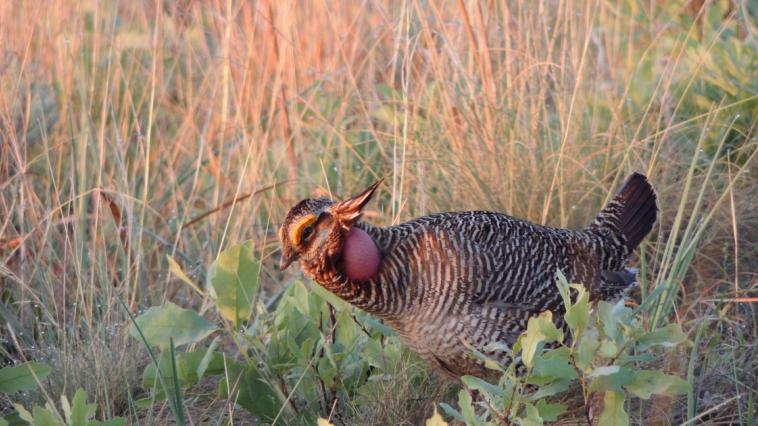
    On August 12, a federal judge in Texas stripped the lesser prairie-chicken of Endangered Species Act (ESA) protection. This is a major setback for the conservation of this Southwestern bird, famous for its elaborate mating rituals.

    The southern population of the bird had been listed as endangered in New Mexico and parts of Texas. The northern population had been listed as threatened in Colorado, Kansas, Oklahoma, and other areas of Texas.

    It’s been a tough road for the lesser prairie-chicken.

    The lesser prairie-chicken has lost approximately 85% of its habitat and its population has declined roughly 97% since 1800. The bird has now been listed and delisted under the ESA multiple times due to lawsuits.

    US Fish and Wildlife Service under the Biden administration listed the lesser-prairie chicken under the ESA in 2022. The states of Texas and energy industry groups filed suit against the federal government to contest the designation.

    But with a new president in the White House, the Department of Interior made an unusual move of asking the judge to rule against it. Judge David Counts of the Western District of Texas sided with the Trump Administration’s claim that the Service’s decision was built on a “serious defect” in its analysis and legal justification.

  • Judge Blocks the Opening of Pacific Marine Monument to Fishing

    Judge Blocks the Opening of Pacific Marine Monument to Fishing

    A federal judge in Hawaii blocked the Trump administration from opening the Pacific Islands Heritage Marine National Monument to commercial fishing.

    In April 2025,  Trump issued an Executive Order for the National Marine Fisheries Service to open the protected area to commercial fishing. On May 22, Earthjustice filed a lawsuit on behalf of Kāpaʻa, the Conservation Council for Hawai‘i, and the Center For Biological Diversity.

    According the US Fish and Wildlife Service:

    The Monument is home to one of the largest and most pristine collections of tropical islands, coral reef, seamounts and deep sea protected areas on the planet.

    Judge Micah WJ Smith ordered the regulations banning commercial fishing to remain in place. The judge agreed with the plaintiffs that the Trump administration broke the law by changing federal rules without going through the legally required public comment process.

    According to Solomon Pili Kaho’ohalahala, Founding Member of Kāpaʻa

    The Fisheries Service cannot ignore our perspectives as the native people who belong to the islands and to the ocean that surrounds us. The law guarantees a process where we can advocate for protecting the generations of our children’s children who are yet to be born.

  • Administration Looks to Divert Money From Conservation Fund

    Administration Looks to Divert Money From Conservation Fund

    The Washington Post reports that the administration is drafting an Executive Order divert money from the Land and Water Conservation Fund (LWCF)—money that was approved by Congress for acquiring new land for national parks and wildlife refuges.

    See our tracker entry: Defunding Land and Water Conservation Fund.

    The LWCF was established by Congress to use the revenue from oil and gas royalties—not taxpayer money—to acquire high-priority conservation land. The Great American Outdoors Act—signed by Trump himself in 2020—permanently funds the LWCF at $900 million / year.

    However, Trump wants to divert that money to pay for long-overdue park repairs. But paying for park repairs should come from the annual federal budget. In fact the Great American Outdoors Act explicitly forbids using the money for this purpose.

    The 3-Pronged Attack on Public Land Acquisition: 

    This is all part of a 3-pronged attack the adminstration is waging on the Land and Water Conservation Fund.

    In a parallel approach, the administration is trying to divert LWCF money via Congress. Trump submitted a budget request to Congress to divert $253 million from the LWCF for park repairs. So far, Congress has rejected Trump’s funding cuts in its spending bills.

    Lastly, The Washington Post article outlines a 3rd approach—willful neglect. The Department of the Interior has not sent Congress a list of proposed purchases for 2026. In other words, the administration is choosing to ignore its duties in spending LWCF money.

  • Senate Appropriations Bill Maintains Funding for AmeriCorps

    Senate Appropriations Bill Maintains Funding for AmeriCorps

    The Senate delivered some good news for Americorps. The appropriations committee approved a spending bill that funds AmeriCorps at close to FY2025 levels. This means we’re a step closer to saving thousands of service positions every year that protect nature and manage our public lands.

    This is encouraging considering the circumstances. The Trump administration has been trying to dismantle Americorps. Trump proposed eliminating  AmeriCorps entirely in his 2026 budget request. Thankfully, the Senate, in bipartisan fashion, rejected Trump’s extreme cuts.

    Voices for National Service, the leading advocate specifically for AmeriCorps, expressed optimism after the outcome.  According to President AnnMaura Connolly:

    We’re encouraged by the Senate Appropriations Committee’s bipartisan agreement to protect AmeriCorps funding. It’s a positive signal, and we deeply appreciate Chairwoman Capito and Ranking Member Baldwin’s leadership in securing that support.

    However, this is just one step in a long appropriations process. Next step: the House will release their spending bill for AmeriCorps. And these bills will then need to be approved by the full chambers, reconciled with each other,  and signed by the president. So it’s a long road ahead.

  • Congress Rejects Cuts to Public Land Agencies. But Does It Matter?

    Congress Rejects Cuts to Public Land Agencies. But Does It Matter?

    This is the 3rd article in a series on nature conservation and the federal budget. See:
    Conservation Code Red: Reviewing the Must-Win Battles in the 2026 Funding Bills
    Good News for NOAA, NRCS as Congress Rejects Trump’s Radical Spending Cuts

    The House and Senate have been releasing their draft spending bills for federal agencies and programs. There have been two big developments for nature.

    1. The House released a draft spending bill for public land agencies that rejects Trump’s steep cuts.

    We now have a draft Congressional spending bill for: National Park Service (NPS), US Fish and Wildlife Service (FWS), Bureau of Land Management (BLM), and US Forest Service (USFS).

    If we look at the numbers, we can see that Congress has rejected the catastrophic funding cuts proposed by the Trump administration.

    Instead, this bill—drafted by the House Committee on Environment and Interior—makes cuts that range from 0% to 8% below 2025 spending. These cuts are similar to those the House released earlier for NOAA and NRCS. And assuming the Senate numbers look better, this is an ok starting place.

    If we look deeper at the House numbers, things look better. The Trump administration had proposed eliminating many funding areas entirely including several USWS grants and USFS State, Private, and Tribal Forestry. The House bill fully funds these programs.

    There are some awful parts to the House bills.  And environmental groups have been understandably focusing on this. First, the bill makes major cuts to the EPA. I’m not trying to downplay the importance of these cuts, but they fall outside my analysis of public land agencies.

    The bill also includes many anti-conservation riders. These are “add ons” to the bill that have nothing to do with spending.  For example, there are riders that attempt to place limits on management of certain endangered species like the lesser prairie-chicken. We need to strip those out as the process progresses.

    2a. The Senate released a draft spending bill for NOAA. The numbers look good.

    Second, the Senate committee overseeing NOAA released its draft budget and the numbers are very good. The Senate’s draft bill funds NOAA at close to 2025 levels. It cuts agency funding less than 1% (compared to a 6% cut in the House version of the bill).

    Importantly, the bill maintains funding for NOAA Research (OAR) which was inked for elimination (zero funding) in Trump’s budget proposal. OAR is an entire division of NOAA with over 800 employees as of 2024. It includes 23 major research centers across the US. It conducts and supports the nation’s leading scientific research on climate, weather, oceans, and lakes.

    The Senate bill fully funds many other programs that Trump wants to eliminate including the National Estuarine Research Reserve System, Office of Habitat Conservation and Restoration, and the Pacific Coastal Salmon Recovery Fund.

    2b. The Senate bill uses striking language to assert control.

    It is the language of the Senate bill that is most notable. Section-by-section, the bill goes into great detail describing each NOAA program, highlighting its importance and explicitly laying out expectations for spending and outcomes.

    Let me give some examples below of some particularly striking language:

    Explicit rejection of administration:

    (pg 39)  The Committee rejects the proposed termination of the NOAA Center of Excellence for Operational Ocean and Great Lakes Mapping and provides $10,000,000. The Center shall continue to work in unison with and leverage existing capabilities…

    Detailing program rationale and purpose. This is everywhere in the bill:

    (pg 41) Coral reefs provide substantial economic benefits by supporting fisheries, tourism, and coastal protection, buffering communities against devastating coastal storms and hurricanes. Environmentally, they sustain unparalleled biodiversity, serving as vital habitats for countless marine species. The alarming decline of coral populations in the United States demands immediate and robust action to reverse this trend and safeguard these invaluable ecosystems for future generations. Therefore, the Committee provides no less than $33,500,000 to conduct reef restoration activities under the Coral Reef Conservation Act.

    Very detailed programatic directions and oversight. This is all over the bill: 

    (pg 46) Within the funding provided for Pacific Salmon, $375,000 shall be for the NMFS West Coast Region to… Further, the Committee directs NMFS to… Specifically, the report should include…  The NMFS shall coordinate with… The NMFS is directed to brief the Committee within 60 days…

    But we need to talk about the elephant in the room. Do the spending bills even matter?

    In the sections below, I want to give my perspective on that question and the overall federal funding situation that nature conservation is facing. But I give the following caveat: I am not in the trenches working on these issues directly with lawmakers. These issues are extremely complicated and dynamic—especially this year. So my insights are limited. Take it for what it’s worth.

    There are real risks right now. 

    Last week, White House Budget Chief Russ Vought—in a very disconcerting speech—dismissed the importance of Congress and spending bills in directing administration’s spending. We have already seen the administration repeatedly ignore the current budget and do what it wants in terms of mass layoffs and not spending appropriated money for programs.

    Furthermore, recent Supreme Court decisions have limited the ability of the courts to quickly rein in the administration when it breaks the law. In the past, the courts could use temporary injunctions to force the administration to follow the letter of the law. But now the administration can ignore Congress for many months or even years before a final court ruling is handed down. And by that point, the damage will likely be irreversible.

    The president’s budget request—while usually is just a proposal for Congress to consider—may be a roadmap of what the administration intends to do, with or without the blessing of Congress. If so, it would be devastating for nature conservation and our natural resources.

    We should be particularly concerned about the NOAA OAR and USGS Ecosystem Mission Area. Both divisions have been zeroed out and inked for elimination in the president’s budget request. Together, they form the backbone of our nation’s scientific research on wildlife, ecology, freshwater, oceans, and climate. Simply put, eliminating or severely cutting them would be a catastrophe for nature conservation.

    Can a new spending bill ever get enacted?

    Then there is the question of whether both chambers of Congress could agree by the fall deadline on a new spending bill that the President would sign. That will be a difficult challenge.

    Reason For Some Optimism

    With all of that being said, there is some reason for optimism. As I outlined earlier, the draft spending bills include strong language throughout. This would be a big change from our current situation.

    Since the beginning of the 2nd Trump presidency, the government has been operating under two different Continuing Resolutions (CR).  These are short term spending bills that Congress adopts to avoid a shutdown. The funding levels of these bills were originally set under Biden and a past session of Congress.

    There is also a problem with the CR language. In stark contrast to the draft spending bills, the CR gives the Executive Branch wide discretion over how to operate and spend money.

    Stronger statutory requirements for agencies and programs

    By clearly defining the rationale, purpose, functions and expected outcomes, these new bills can set strong statutory requirements for agencies to do the work that Congress wants it to do. It leaves little wiggle room.

    Of course the administration can still choose to ignore Congress and unilaterally terminate programs, freeze grants, and layoff employees. But these bills more clearly establish the legal pitfalls of doing so. And maybe I’m being overly optimistic, but—hopefully—they also show a willingness of Congress to assert some control over the administration’s actions.

    Below I have updated the numbers on my running list of funding priorities in nature conservation: 

    17 Funding Priorities in Nature Conservation

    1) AmeriCorps

    • FY25 Funding Amount:  $1.262 billion
    • FY26 Trump Proposal:  $107 million  ($1,155 billion cut), -91%
    • FY26 House Draft Bill:
    • FY26 Senate Draft Bill:
    • FY26 Final Spending Bill:

    Discussion: AmeriCorps plays a major role in conservation work and early career professional development. Learn more about Trump’s dismantling of AmeriCorps. Trump’s budget request eliminates AmeriCorps entirely. The FY26 funding would be used for the administrative costs of winding down operations. Essentially this would help codify the elimination of AmeriCorps.

    2) USGS – Ecosystem Mission Area

    • FY25 Funding Amount:  $292 million
    • FY26 Trump Proposal:  $0.00  ($292 million cut), 100% decrease. 
    • FY26 House Draft Bill:
    • FY26 Senate Draft Bill:
    • FY26 Final Spending Bill:

    Discussion: USGS Ecosystem Mission Area is the backbone of our nation’s ecological research. Read more here. Trump is proposing elimination of this critically important agency division. The House draft bill doesn’t break out USGS EMA figures yet.

    3) National Park Service

    • FY25 Funding Amount:  $3.337 billion
    • FY26 Trump Proposal:  $2.116 billion  ($1,220 billion cut), 37% debcrease. 
    • FY26 House Draft Bill:  $3.124 billion  ($212 million cut), 6% decrease
    • FY26 Senate Draft Bill:
    • FY26 Final Spending Bill:

    Discussion: Trump proposed steep cuts for an already underfunded agency. It would likely result in the closure or reduced visiting hours of many sites. The House draft bill makes significant but much lower cuts.

    4) Bureau of Land Management  – Management of Lands and Resources

    • FY25 Funding Amount:  $1.294 billion
    • FY26 Trump Proposal:  $827 million  ($467 million cut), 36% decrease. 
    • FY26 House Draft Bill:  $1.193 billion  ($101 million cut), 8% decrease. 
    • FY26 Senate Draft Bill:
    • FY26 Final Spending Bill:

    Discussion: The BLM manages 245 million acres land. Trump’s funding proposal would fund those efforts for the entire year at less than $2 per acre. The House draft bill makes significant but much lower cuts.

    5) US Fish and Wildlife Service (USFWS) – Total Agency

    • FY25 Funding Amount:  $1.677 billion
    • FY26 Trump Proposal:  $1.139 billion  ($538 million cut), 32% decrease.  
    • FY26 House Draft Bill:  $1.569 billion  ($108 million), 6% decrease.
    • FY26 Senate Draft Bill:
    • FY26 Final Spending Bill:

    Discussion: This is the funding level for the entire agency which includes enforcing federal laws like the Endangered Species Act and managing our National Wildlife Refuge system (which is larger than our National Parks). The House draft bill makes significant but much lower cuts.

    6) USFWS – Wildlife Conservation Grants 

    • FY25 Funding Amount:  $169 million
    • FY26 Trump Proposal:  $0.00 ($169 million cut), 100% decrease. 
    • FY26 House Draft Bill:  $167 million  ($2 million cut),  1% decrease. 
    • FY26 Senate Draft Bill:
    • FY26 Final Spending Bill:

    Discussion: This also falls within (5) Total Agency, but I’m breaking it out separately due to the urgency.

    In this funding area, I’m combing 5 conservation grant programs that Trump wants to end: Cooperative Endangered Species Conservation Fund, North American Wetlands Conservation Fund, Multinational Species Conservation Fund, Neotropical Migratory Bird Conservation Fund, State and Tribal Wildlife Grants.

    Trump’s budget proposal completely eliminates funding for these grants. The House draft bill funds at close to 2025 levels.

    7) US Forest Service – Forest and Rangeland Research

    • FY25 Funding Amount:  $300 million
    • FY26 Trump Proposal:  $0.00  ($300 million cut), 100% decrease.  
    • FY26 House Draft Bill:  $301 million  ($1 million boost) 1% increase.
    • FY26 Senate Draft Bill:
    • FY26 Final Spending Bill:

    Discussion: Trump is proposing eliminating the US Forest Service’s Experimental Forests and Ranges. The House draft bill fully funds this division.

    8) US Forest Service – State, Private, and Tribal Forestry

    • FY25 Funding Amount:  $283 million
    • FY26 Trump Proposal:  $0.00  ($283 million cut), 100% decrease.  
    • FY26 House Draft Bill:  $280 million  ($3 million cut), 1% decrease.
    • FY26 Senate Draft Bill:
    • FY26 Final Spending Bill:

    Discussion:  Trump wants to completely eliminate US Forest Service’s State, Private, Tribal Forestry. The House draft bill funds at close to 2025 levels.

    9) US Forest Service – National Forest System

    • FY25 Funding Amount:  $1.863 billion
    • FY26 Trump Proposal:  $1.296 billion  ($567 million cut), 30% decrease.  
    • FY26 House Draft Bill:  $1.866 billion  ($3 million boost).
    • FY26 Senate Draft Bill:
    • FY26 Final Spending Bill:

    Discussion: Once again, this is an already underfunded agency tasked with managing a large area of land (193 million acres, more than 2 x the size of our National Parks). The House bill rejects Trump’s cuts and actually increases funding slightly.

    10) Natural Resource Conservation Service (NRCS) – Conservation Operations

    • FY25 Funding Amount:  $896 million
    • FY26 Trump Proposal:  $112 million  ($784 million cut), 87% decrease.  
    • FY26 House Draft Bill:  $850 million  ($46 million cut), 5% decrease.
    • FY26 Senate Draft Bill:  $896 million, 0% decrease. 
    • FY26 Final Spending Bill:

    Discussion: The House and Senate Committees on Agriculture have rejected Trump’s extreme cuts for NRCS.

    11) NOAA – Total Agency

    • FY25 Funding Amount:  $6.182 billion
    • FY26 Trump Proposal:  $4.513  billion ($1.669 billion cut), 27% decrease.  
    • FY26 House Draft Bill:  $5.795 billion ($387 million cut), 6.27% decrease. 
    • FY26 Senate Draft Bill:  $6.141 billion ($41 million cut), 0.67% decrease.
    • FY26 Final Spending Bill:

    Discussion:  The House draft bill makes significant cuts to NOAA. But it rejects the extreme cuts that would be needed to eliminate the programs listed below. The Senate bill funds NOAA at close to 2025 levels.

    12) NOAA – Oceanic And Atmospheric Research (OAR) 

    • FY24 Funding Amount:  $668 million
    • FY26 Trump Proposal:  $0.00  ($668 million cut), 100% decrease.  
    • FY26 House Draft Bill:
    • FY26 Senate Draft Bill:  $657 million  ($11 million cut),  1.7% decrease. 
    • FY26 Final Spending Bill:

    Discussion:  Trump is proposing to completely eliminate a massive, wide ranging research wing of our government. NOAA Research and its 880 employers (as of 2024) make up our nation’s leading research centers on climate, weather, oceans, and lakes. The Senate bill rejects Trump’s cuts and funds NOAA at close to 2025 levels.

    13) NOAA – National Marine Fisheries Service (NMFS)

    • FY24 Funding Amount:  $1.219 billion
    • FY26 Trump Proposal:  $789 million  ($429 million cut), 35% decrease.  
    • FY26 House Draft Bill:
    • FY26 Senate Draft Bill:  $1.129 billion  ($89 million cut),  7.36% decrease.
    • FY26 Final Spending Bill:

    Discussion: NMFS (NOAA Fisheries) is another division of NOAA facing major cuts. Several offices get hit particularly hard. I feature two below.

    14) NOAA – Protected Resources Science and Management 

    • FY24 Funding Amount:  $264 million
    • FY26 Trump Proposal:  $115 million ($149 million cut), 56% decrease.  
    • FY26 House Draft Bill:
    • FY26 Senate Draft Bill:  $270 million ($6 million boost),  2.63% increase. 
    • FY26 Final Spending Bill:

    Discussion: This falls under (13) NMFS. The Office of Protected Resources is responsible for the protection and recovery of more than 150 endangered and threatened marine species under the Endangered Species Act. The Senate not only rejects Trump’s extreme cuts here, they actually increase funding.

    15) NOAA – Habitat Conservation and Restoration

    • FY24 Funding Amount:  $56 million
    • FY26 Trump Proposal:  $0.00  ($56 million cut), 100% decrease.  
    • FY26 House Draft Bill:  
    • FY26 Senate Draft Bill:  $57 million ($1 million boost), 2.67% increase 
    • FY26 Final Spending Bill:

    Discussion: This falls under (13) NMFS. I’ve broken it out because the Office of Habitat Conservation and its 192 employees (as of 2024) face elimination unless Congress rejects Trump’s cuts. The Senate not only rejects Trump’s extreme cuts here, they actually increase funding.

    16) NOAA – Ocean and Coastal Management and Services

    • FY24 Funding Amount:  $296 million
    • FY26 Trump Proposal:  $112 million  ($184 million cut), 62% decrease. 
    • FY26 House Draft Bill:
    • FY26 Senate Draft Bill:  $299 million ($3 million boost), 1% increase. 
    • FY26 Final Spending Bill:

    Discussion: This section of the NOAA budget includes multiple divisions facing steep cuts: a) National Estuarine Research Reserve System (NERR); b) Sanctuaries and Marine Protected Areas; c) Coral Reef Conservation, and others. Of particular note, NERR is facing elimination unless Congress rejects Trump’s cuts.

    The Senate not only rejects Trump’s extreme cuts here, they actually increase funding.

    17) NOAA – Pacific Salmon Recovery Fund

    • FY24 Funding Amount:  $65 million
    • FY26 Trump Proposal:  $0.00  ($65 million cut), 100% decrease. 
    • FY26 House Draft Bill:  $65 million, 0% decrease. 
    • FY26 Senate Draft Bill:  $65 million, 0% decrease. 
    • FY26 Final Spending Bill:

    Discussion: The House and Senate draft bills reject Trump’s cuts to the Pacific Salmon Recovery Fund and maintain funding at prior levels.